Choosing the right Wpc Wood Plastic manufacturer in China requires more than comparing prices. Product quality can vary between factories, even when their catalogs appear similar. A reliable supplier should demonstrate practical experience, stable production, and clear technical knowledge.
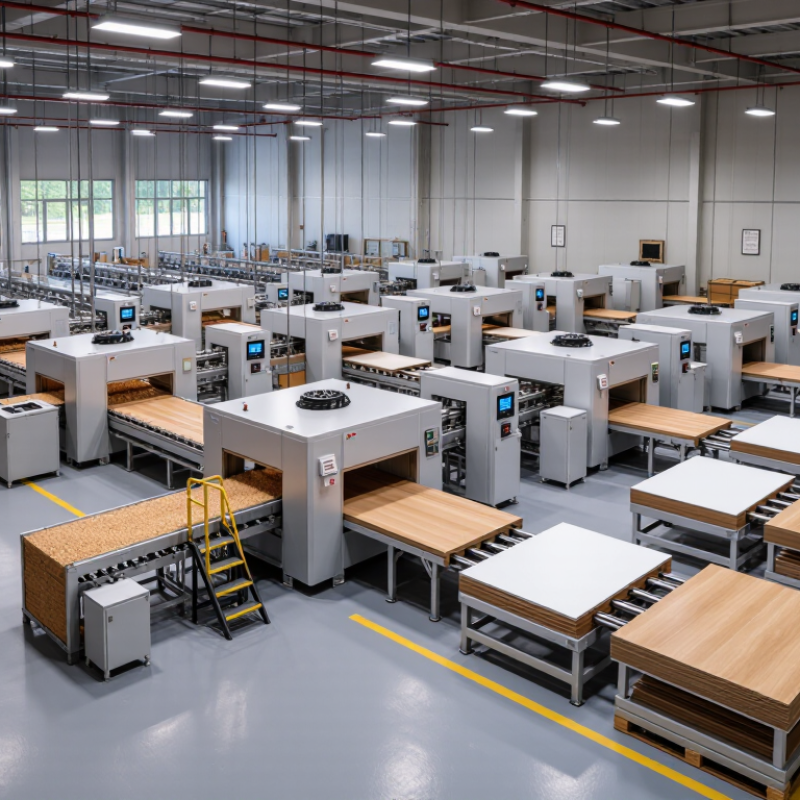
This guide explores leading China WPC manufacturers through measurable criteria. These include raw material control, extrusion technology, surface treatment, product consistency, and after-sales support. A professional factory should explain its wood-to-polymer ratio, moisture resistance, color stability, and load performance. Factory audits also matter. Clean storage areas, organized production lines, and documented quality checks often reveal more than polished brochures.
Look closely at test samples. Check the texture under direct light. Examine cut edges for uneven blending, brittleness, or visible voids. Ask for relevant test reports and verify whether they match the supplied product. Strong manufacturers can usually provide production specifications, packaging details, and realistic lead times. They should also communicate limitations honestly, because no composite material performs perfectly in every climate.
Supplier selection remains partly practical and partly judgment-based. A factory may offer attractive pricing but lack dependable export experience. Another may provide excellent samples but struggle with large orders. This guide compares these differences carefully, helping buyers assess quality, customization, compliance, and long-term reliability. The rankings should not replace independent verification. Conditions change, and a promising supplier still deserves a careful review before any commercial decision.
China WPC Market Size, 2024–2030 Growth, and Key Application Segments
China WPC Market Size, 2024–2030 Growth, and Key Application Segments
China’s WPC market is expanding as builders seek durable, low-maintenance alternatives to traditional wood. From 2024 to 2030, growth should remain steady, supported by urban renovation, outdoor construction, and public landscaping. Exact forecasts differ because researchers define WPC products differently. Some include decking only. Others also count wall panels, fences, doors, and interior profiles.
The strongest application segments include residential balconies, garden decking, railings, municipal walkways, and commercial façades. Outdoor products remain important because they resist moisture, insects, and surface decay. However, performance depends on resin quality, wood-fiber content, drainage design, and installation methods. Experienced buyers should examine slip resistance, color stability, dimensional movement, and test reports. A low purchase price can become expensive when boards warp or require early replacement. Forecasts sound confident, but real demand may change with property investment and construction cycles.
Tips: Compare manufacturers through independent test data, production consistency, mold design, and after-sales support. Ask for samples exposed to sunlight and rain. Check whether the supplier explains installation gaps clearly. Recycled content can improve sustainability, but it does not automatically prove better performance. That point deserves careful review.
China WPC Market Size and Key Application Segments, 2024–2030
Estimated China WPC market revenue by application, in USD billions.
The market is estimated to grow from approximately USD 2.10 billion in 2024 to
USD 3.40 billion by 2030, representing an estimated CAGR of about
8.4%. Decking and cladding remain the largest application segments, followed by
fencing, automotive components, furniture, and other uses.
Source note: Market-size figures are synthesized estimates based on publicly reported industry growth ranges; values may vary by research methodology.
WPC Material Benchmarks: 50–70% Wood Fiber and 30–50% Polymer
What Are the Top China WPC Wood Plastic Manufacturers?
WPC material quality begins with the formulation, not the factory brochure. Industry benchmarks commonly specify 50–70% wood fiber and 30–50% polymer. This range appears in technical reviews from the USDA Forest Products Laboratory and market research from Grand View Research. Higher wood content can improve stiffness and natural texture. However, it may also increase moisture sensitivity and processing difficulty.
The polymer fraction usually contains polyethylene, polypropylene, or similar thermoplastics. It binds the fibers and supports weather resistance. Manufacturers should document fiber moisture, particle size, coupling agents, and extrusion temperature. ASTM D7031 highlights testing needs for appearance, strength, dimensional stability, and durability. Those details matter more than a glossy surface sample.
Small differences matter.
A 60:40 wood-to-polymer formula may feel rigid underfoot, while a 50:50 formula may offer better water resistance. The best ratio depends on climate, profile design, and intended loading. I would not treat 50–70% as a universal rule. Some technical reports simplify the supply chain, while actual production often needs adjustment. Independent testing should verify density, water absorption, bending strength, and color stability before comparing Chinese manufacturers.
Leading China WPC Manufacturers by Capacity, Certifications, and Export Reach
China’s leading WPC manufacturers are best compared by measurable capacity, certifications, and export performance. Grand View Research estimated the global wood-plastic composites market at about USD 7.6 billion in 2022. It also projected a 7% annual growth rate through 2030. This demand encourages larger Chinese factories to expand extrusion lines, drying systems, and automated surface treatment. However, published capacity can be difficult to verify. Factory visits and production records remain important.
A strong manufacturer should provide valid ISO 9001 quality-management certification, ISO 14001 environmental certification, and product test reports from accredited laboratories. For outdoor decking, buyers should check water absorption, flexural strength, slip resistance, color retention, and fire performance. Intertek and SGS testing can support technical credibility, but certificates must match the exact product and production site. A certificate alone proves less than consistent batch records.
Export reach offers another useful benchmark. China Customs data and ITC Trade Map show China’s broad strength in plastic and building-material exports, although WPC products are often recorded under wider customs categories. That limitation deserves attention. Reliable suppliers usually maintain export packaging standards, container-loading photos, multilingual specifications, and traceable shipment histories across Asia, Europe, North America, and the Middle East. Capacity matters. Yet delivery consistency, resin formulation, and after-sales response often reveal the real difference. Some manufacturers still rely heavily on optimistic brochures. Careful buyers should request recent test reports, monthly output evidence, and independent factory verification before placing large orders.
Product Quality Metrics: Water Absorption, Density, and 20–30-Year Service Life
For buyers comparing China WPC wood plastic manufacturers, water absorption is a practical quality filter. ASTM D570 is widely used to measure moisture uptake after immersion. Published WPC testing commonly reports 24-hour absorption below 1% for well-formulated decking, while lower-grade boards may exceed 3%. The number matters. A board that swells around a cut edge can loosen fasteners and trap dirt.
Density also deserves close attention. ASTM D792 and ISO 1183 methods provide a consistent basis for measurement. Commercial WPC decking often falls near 1.1–1.4 g/cm³, depending on wood flour, polymer, and mineral filler content. Higher density does not automatically mean better performance. Excess filler may increase weight while reducing impact resistance. Ask for batch test records, not only a catalog value.
Service life claims require more skepticism. ISO 15686 principles emphasize exposure conditions, maintenance, and documented field performance. A 20–30-year outdoor life may be realistic in controlled climates with proper drainage and UV protection. It is not a universal promise. ASTM weathering results can show color change, cracking, and strength loss, but accelerated testing cannot perfectly reproduce thirty winters. I would request water absorption, density, freeze-thaw, and aging data from the same production batch. Small details matter. Manufacturers should explain test dates, sample thickness, and laboratory accreditation. Some datasheets still omit these basics, and that omission deserves attention.
Supplier Comparison Using MOQ, Lead Time, Pricing, and ASTM/EN Standards
China’s WPC manufacturing base is expanding with global construction demand. Grand View Research valued the global WPC market at about USD 7.3 billion in 2023. Its report also projects strong growth through 2030. However, market size does not prove supplier reliability. Factory audits still matter.
MOQ is often the first practical filter. Many Chinese suppliers quote 100–500 square meters for standard decking profiles. Custom colors, molds, and co-extruded surfaces can require higher volumes. Typical production lead times range from 15 to 35 days after deposit. Busy seasons may add two weeks. Ask for a dated production schedule, not a verbal promise.
Pricing needs careful comparison. Resin content, wood-fiber ratio, surface treatment, packaging, and freight can change the final cost sharply. A low quote may exclude pallets, testing, or color matching. Pricing misleads. Independent reports from Freedonia and Grand View Research show that material costs and construction demand strongly influence WPC prices. For technical verification, request test results aligned with ASTM D7032, ASTM D6662, or EN 15534. These standards help assess load performance, decking suitability, moisture behavior, and durability. Yet certificates can be incomplete or outdated. My comparison remains imperfect without recent batch samples, factory records, and third-party laboratory checks. Samples matter.
FAQS
Compare verified production capacity, quality records, and export history. Published capacity can be difficult to confirm. Request recent output records and an independent factory check.
Check water absorption, density, flexural strength, slip resistance, color retention, and fire performance. Test reports should match the exact product and production site. Batch records matter.
Well-formulated decking commonly records below 1% absorption after 24-hour immersion. Lower-grade boards may exceed 3%. Ask for results from a recent production batch.
Commercial boards often measure around 1.1–1.4 g/cm³. Higher density does not automatically mean better performance. Excess filler can add weight while reducing impact resistance.
That service life may be realistic with suitable drainage, UV protection, and climate conditions. It is not a universal promise. Accelerated tests cannot perfectly reproduce decades outdoors.
Standard profiles often require 100–500 square meters. Custom colors or molds may need larger orders. Production commonly takes 15–35 days after deposit, with busy periods adding about two weeks.
Resin content, wood-fiber ratio, surface treatment, packaging, and freight affect the final cost. A low quote may exclude pallets, testing, or color matching. Compare full costs.
Request current test reports, dated production schedules, batch records, and shipment histories. Check relevant ASTM or EN test results. Samples matter. I would still verify the factory independently.
Conclusion
China’s Wpc Wood Plastic market is expanding steadily from 2024 to 2030, supported by growing demand for durable, low-maintenance materials in outdoor decking, fencing, landscaping, construction, and public infrastructure. Most products are formulated with approximately 50–70% wood fiber and 30–50% polymer, with additives used to improve color stability, weather resistance, and processing performance. This composition allows manufacturers to balance natural appearance, structural strength, and production efficiency.
When evaluating leading Chinese manufacturers, buyers should compare production capacity, quality certifications, export experience, and technical support. Important product benchmarks include water absorption, density consistency, surface durability, and an expected service life of 20–30 years under suitable conditions. Supplier selection should also consider minimum order quantities, lead times, pricing transparency, and compliance with applicable ASTM or EN standards. A structured comparison helps importers identify reliable partners and choose WPC solutions that match project requirements, climate conditions, installation methods, and long-term maintenance expectations.

 Yida Wood